
Egg yolk separator machine
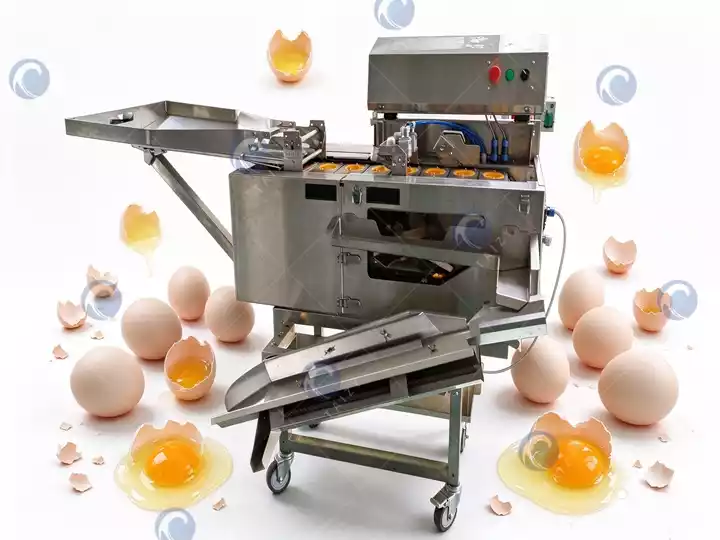
| Nome | four-row automatic egg white and yolk separator |
| Capacidade | 11,000–12,000 eggs per hour |
| Tensão | 220 V |
| Poder | 0.4 kW |
| Dimensões | 1750 × 1200 × 1100 mm |
| Peso | 200 kg |
Agora você pode pedir detalhes técnicos aos nossos gerentes de projeto
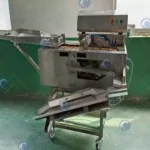
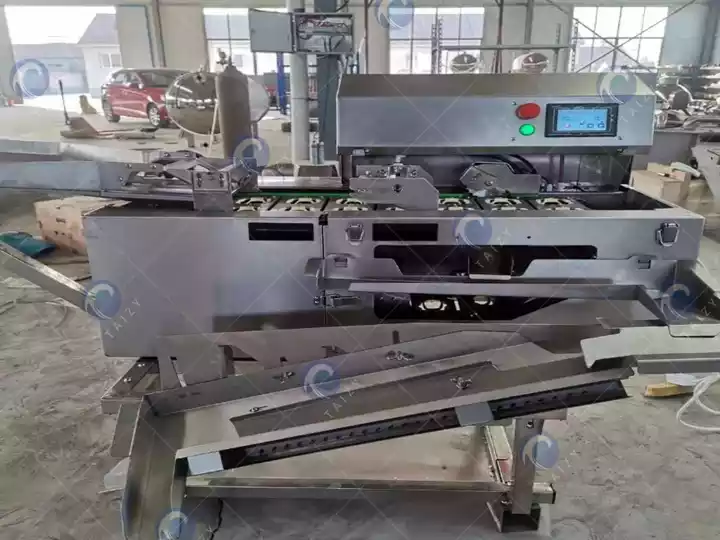
The egg yolk separator machine is an automatic egg-breaking and separation system that cracks, opens and drains chicken or duck eggs and delivers egg white and yolk into two separate containers in one continuous pass. It replaces manual cracking on a production line, keeping shell, white and yolk apart while protecting hygiene and freshness.
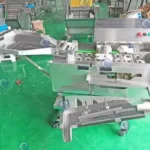
Built on a four-row conveyor, the machine runs at a capacity of 11,000–12,000 eggs per hour — roughly 400–450 kg of liquid egg per hour, depending on egg size — making it suitable for liquid-egg plants, bakeries, noodle and mayonnaise factories, caterers and egg distributors.
Commercial Egg Yolk Separator Machine for Sale
An egg yolk separator machine is equipment that automates two jobs that are normally done by hand: breaking the shell and separating the white from the yolk.
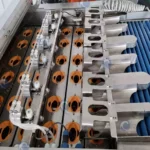
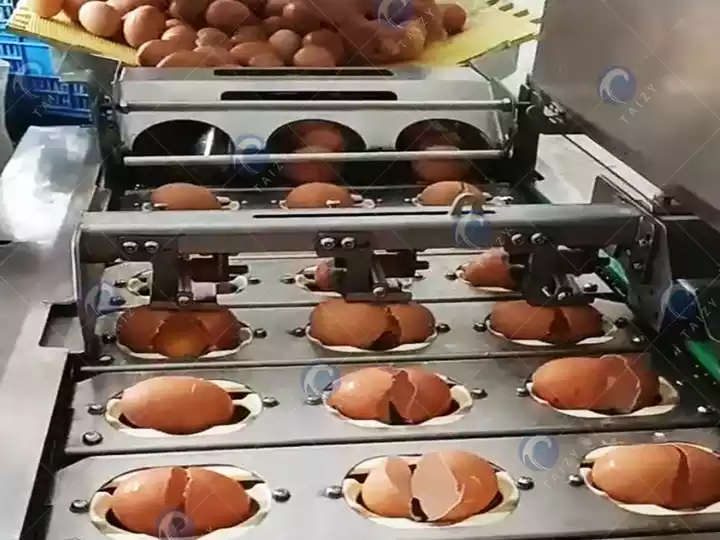
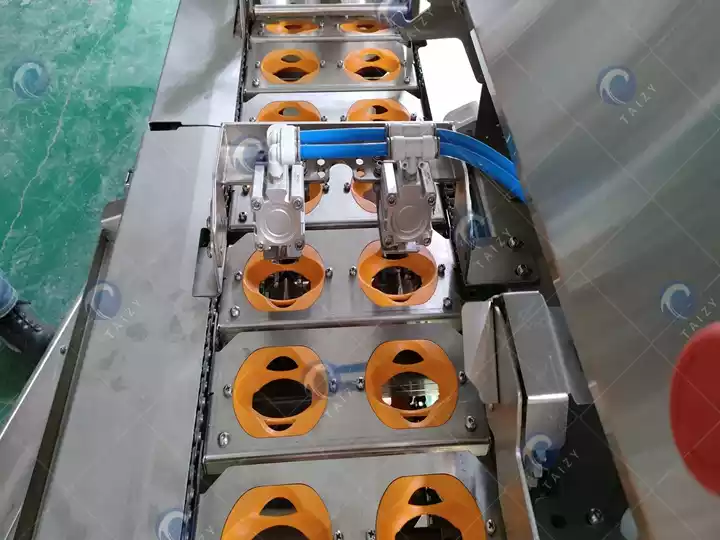
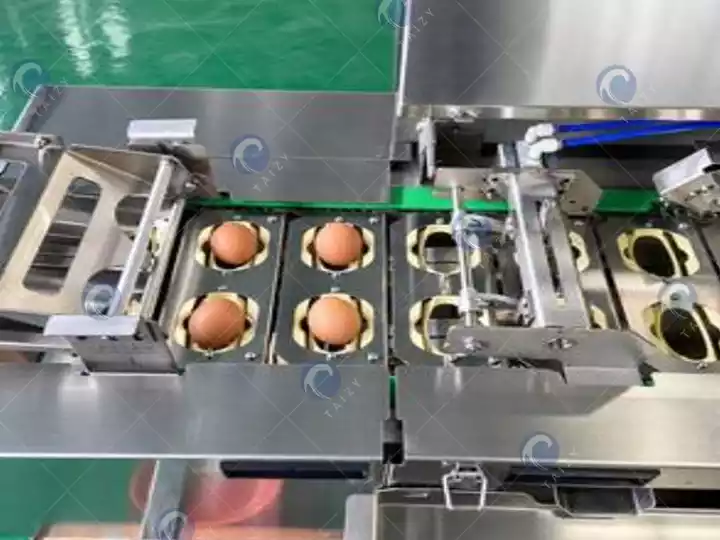
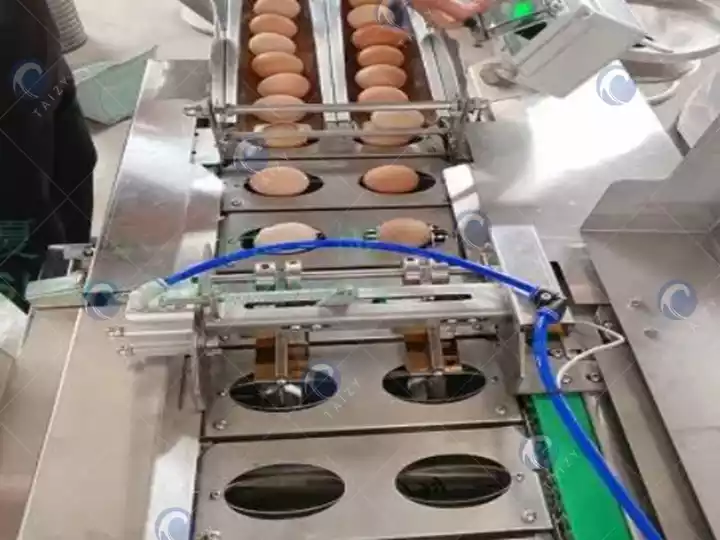
Eggs are loaded into the mould holes of a conveyor, carried to the breaking station, cut and opened by a clamping device, and then guided into a separation unit where the white flows into one container and the yolk into another. The empty shell drops into a separate waste container.
The result is a clean, repeatable separation with far less shell fragment, less spillage and a much lower risk of yolk breakage than manual cracking. Because the whole process runs on a single conveyor, one operator can supervise a steady flow of 11,000 to 12,000 eggs every hour.
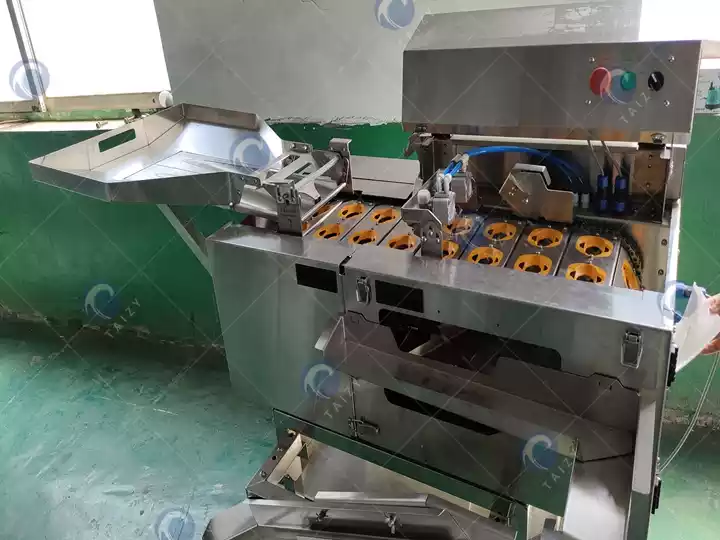
Egg Yolk Separator Machine Typical Applications
This commercial egg breaker and separator is designed for operations that process eggs in volume rather than by the tray:
- Liquid egg and pasteurised egg product suppliers.
- Bakeries, cake and pastry plants.
- Mayonnaise, sauce and dressing manufacturers.
- Noodle, dumpling and frozen food factories.
- Hotels, central kitchens and catering companies.
- Egg washing, grading and packing stations that want to add value.
If your daily output is measured in thousands of eggs rather than dozens, an automatic egg breaking machine pays for itself through labour savings and consistent yield.
How the Machine Separates Egg White and Yolk?
The working sequence is simple and mechanical, which is why maintenance is straightforward:
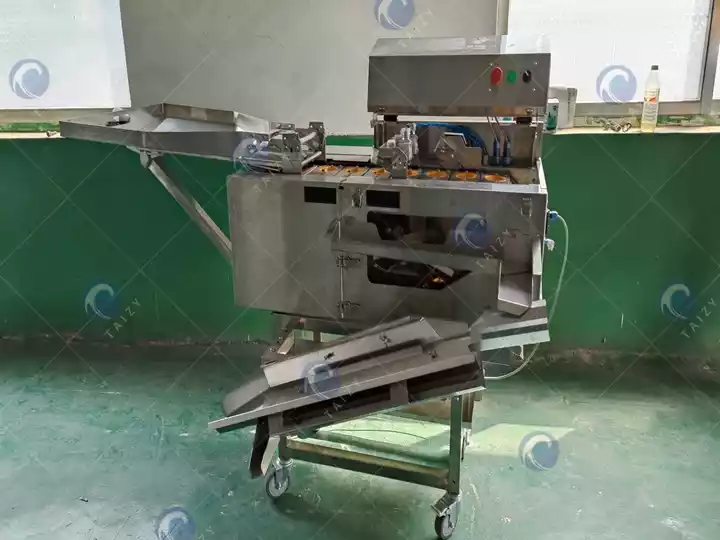
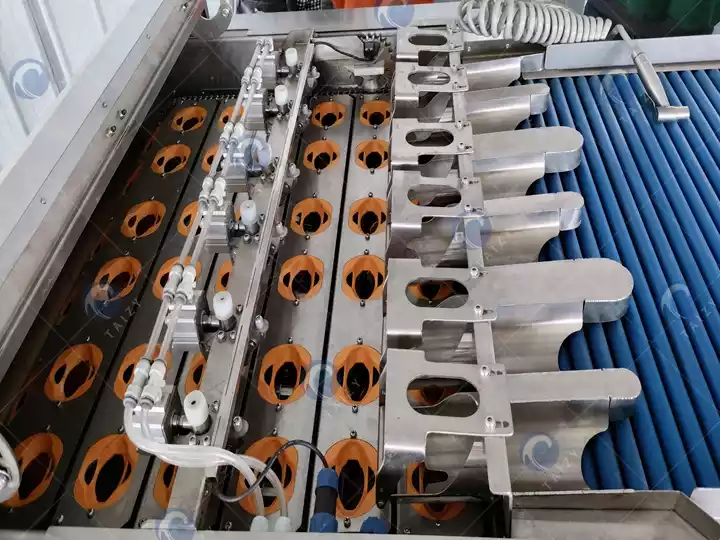
- Loading — washed chicken or duck eggs are placed into the mould holes of the infeed conveyor.
- Conveying — the eggs travel in four parallel rows toward the breaking head.
- Cracking — at the breaking station the shell is automatically cut open.
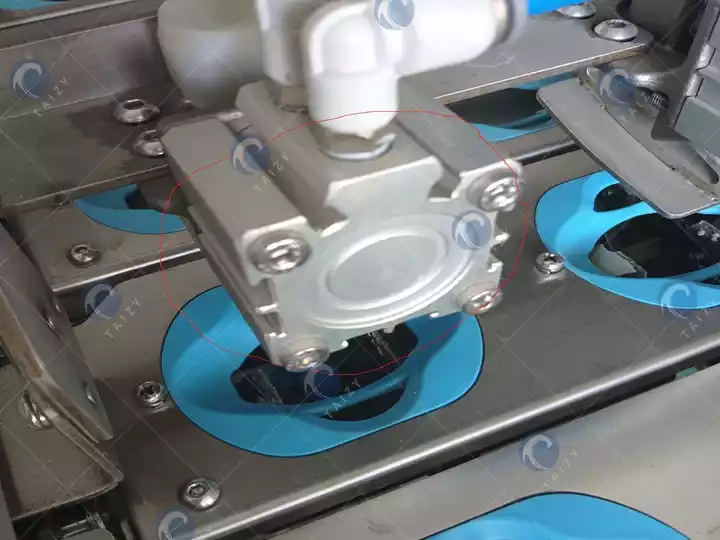
- Opening — a clamping device pulls the shell apart from the break point to both sides.
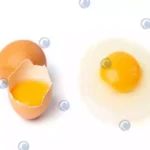
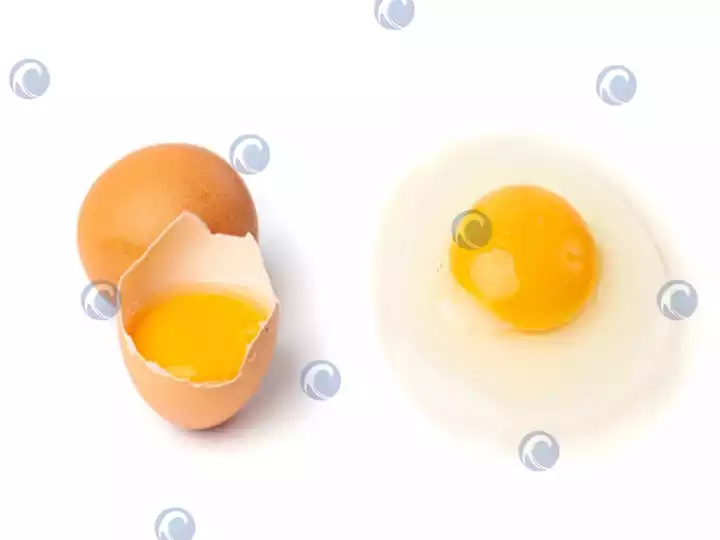
- Separation — white and yolk flow out of the shell into the separation unit, where the white is channelled into one container and the yolk into another.
- Shell discharge — the empty shell falls into a dedicated waste container.
Every egg passes through the same sequence, so the separation result stays consistent from the first tray to the last.
Technical Specifications
- Model type: four-row automatic egg white and yolk separator
- Capacity: 11,000–12,000 eggs per hour
- Voltage: 220 V
- Power: 0.4 kW
- Dimensions: 1750 × 1200 × 1100 mm
- Weight: 200 kg
- Material: full 304 stainless steel
- Applicable raw materials: chicken eggs and duck eggs
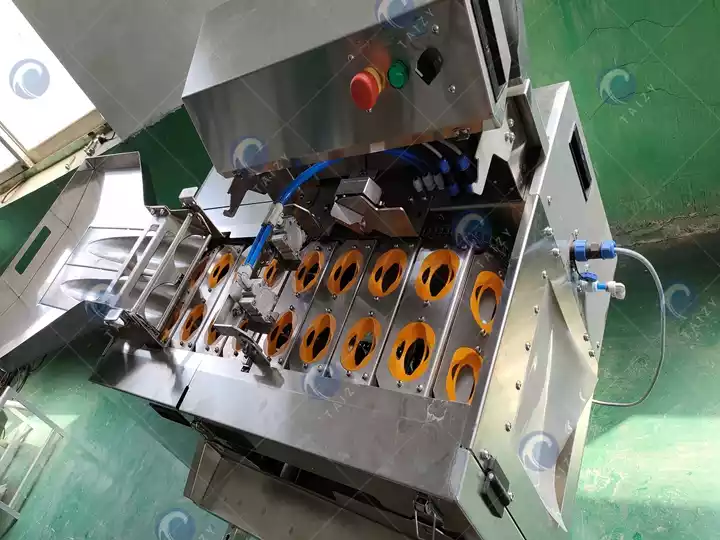
- Structure: frame, power system, breaking unit, egg white and yolk separation device
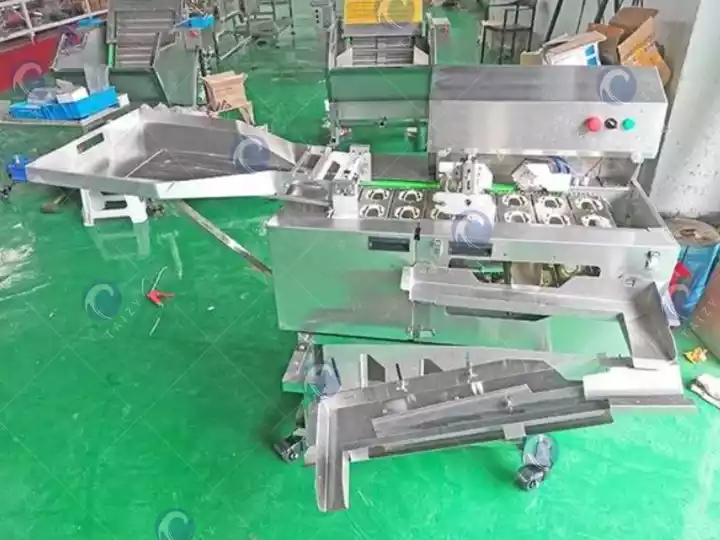
The low 0.4 kW motor keeps energy costs negligible even during long shifts, and the compact 1750 mm footprint fits into most existing production rooms.
Egg Yolk Separator Machine Key Features and Benefits
- Full 304 stainless steel construction. The frame, contact parts and panels are made of food-grade 304 stainless steel, so the machine resists corrosion from egg liquid and daily washing, and meets the hygiene expectations of food factories.
- Four-row throughput. Four parallel lanes multiply output without multiplying floor space, which is how a compact 200 kg unit reaches 11,000–12,000 eggs per hour.
- Clean separation, less waste. Mechanical cracking and clamping produce a more consistent break than manual work, reducing shell fragments in the liquid and limiting yolk contamination of the white.
- Low running cost. A single 0.4 kW motor, standard 220 V supply and simple mechanical action mean low power consumption and few wearing parts.
- Easy to clean and maintain. Open access to the conveyor, breaking head and separation tray allows quick rinsing and inspection between batches, which supports daily sanitation routines.
- Flexible integration. The machine can run as a stand-alone unit or be placed after washing, drying and candling equipment to form a complete egg processing line.
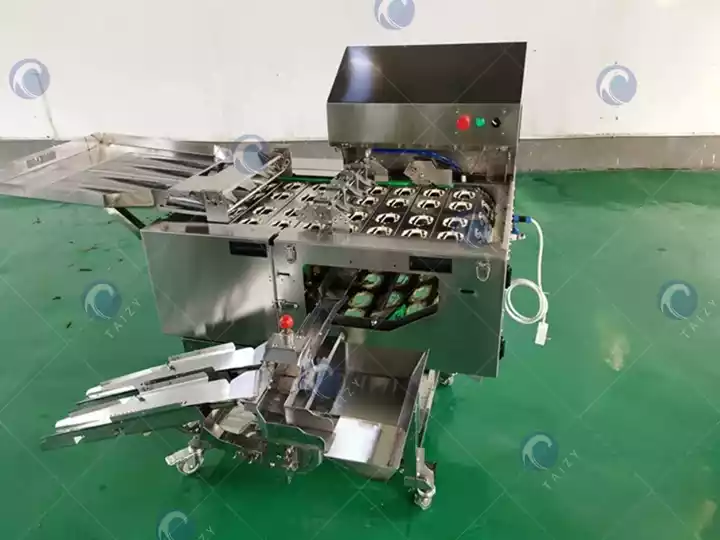
Egg White and Yolk Output: Yield and Uses
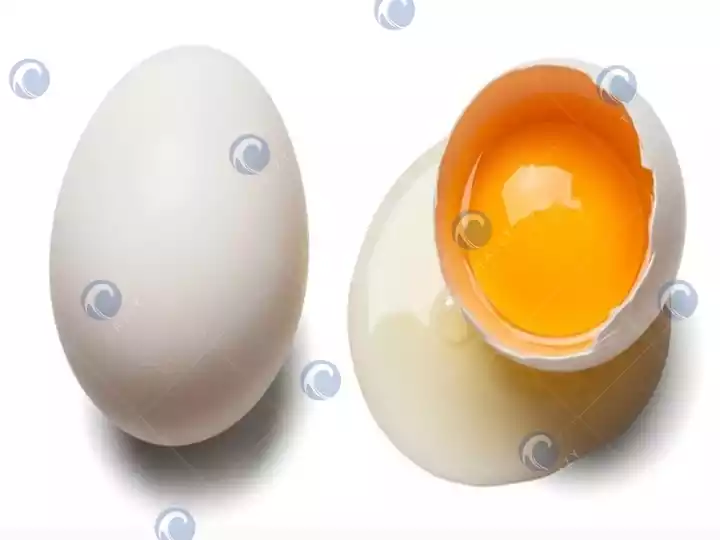
Because the machine separates rather than blends, both streams stay usable. Egg white is typically used for meringue, angel food cake, macarons, surimi and protein products, while yolk goes into mayonnaise, custard, sauces, bakery creams and egg powder. Separating on site lets processors buy whole shell eggs, use each fraction where it earns the most, and avoid paying for pre-separated liquid egg.
Actual yield depends on egg size, freshness and handling, but a well-run line normally recovers the great majority of the usable liquid from each egg, with shells leaving the machine reasonably dry.
Operation, Cleaning and Maintenance
Operation requires only basic training: load eggs evenly into the mould holes, keep containers under both outlets, and monitor the breaking head. Daily cleaning involves flushing the conveyor and separation tray with water and a food-safe detergent, then drying the stainless surfaces.
Weekly checks should cover belt tension, the clamping device, and the condition of the breaking blades. Because the design is mechanical and uses a single motor, spare-part needs are limited and downtime is short.
Build a Complete Egg Processing Line
The separator works best as one stage of a larger line. A typical configuration runs:
washing → drying → candling → egg breaking and separating → pasteurising / chilling → packing
Matching the separator’s capacity to the upstream washer and downstream pasteuriser keeps the whole line balanced, and customised layouts are available for rooms with limited space or unusual egg sizes.
How to Choose the Right Egg Yolk Separator Machine?
Before you request a quotation, confirm these five points:
- Capacity match. A 11,000–12,000 eggs/hour machine suits mid-to-large operations. If you plan to grow, size the line for peak season rather than average demand.
- Egg type and size. Confirm that the machine is set up for your mix of chicken and duck eggs, since shell strength and size affect the breaking setting.
- Separation requirement. Decide whether you need whole-yolk output, white-only output, or both, and how strict your yolk-contamination limit is.
- Hygiene and material. Insist on 304 stainless steel for all food-contact parts and check that the machine can be opened for cleaning.
- Support and spares. Ask about installation guidance, operator training, warranty terms and the availability of wearing parts such as breaking blades and belts.
Egg Yolk Separator Machine Frequently Asked Questions
Does the machine damage the yolk?
The clamping device opens the shell from the break point outward and lets the contents flow out by gravity, which keeps yolk breakage low compared with manual cracking.
What material is the machine made of?
All major parts, including the frame and food-contact surfaces, are made of 304 stainless steel for hygiene and durability.
Can it be combined with washing and candling equipment?
Yes. It can be installed after egg washing, drying and candling machines to form a complete automatic processing line.
Conclusão
An egg yolk separator machine turns a slow, labour-intensive manual job into a steady, hygienic process. With four-row operation, 11,000–12,000 eggs per hour, full 304 stainless steel construction and a 0.4 kW motor, this separator is a practical upgrade for any business that handles eggs in volume.
Contact us with your daily output and egg type, and we will recommend the right configuration and line layout for your plant.